Printed circuit boards sit at the core of nearly every electronic device built today. As end products grow more capable and more compact, the manufacturing processes behind them are being pushed in directions that would have seemed ambitious just five years ago.
Staying current with where PCB fabrication is heading matters whether you are designing a new product, evaluating suppliers, or managing a production line. Choosing reliable PCB fabrication services that keep pace with these developments directly affects your product's performance, yield rates, and time to market. Here are ten trends reshaping how PCBs are designed and built right now.
1. HDI Boards Are Becoming the Default for Consumer Electronics
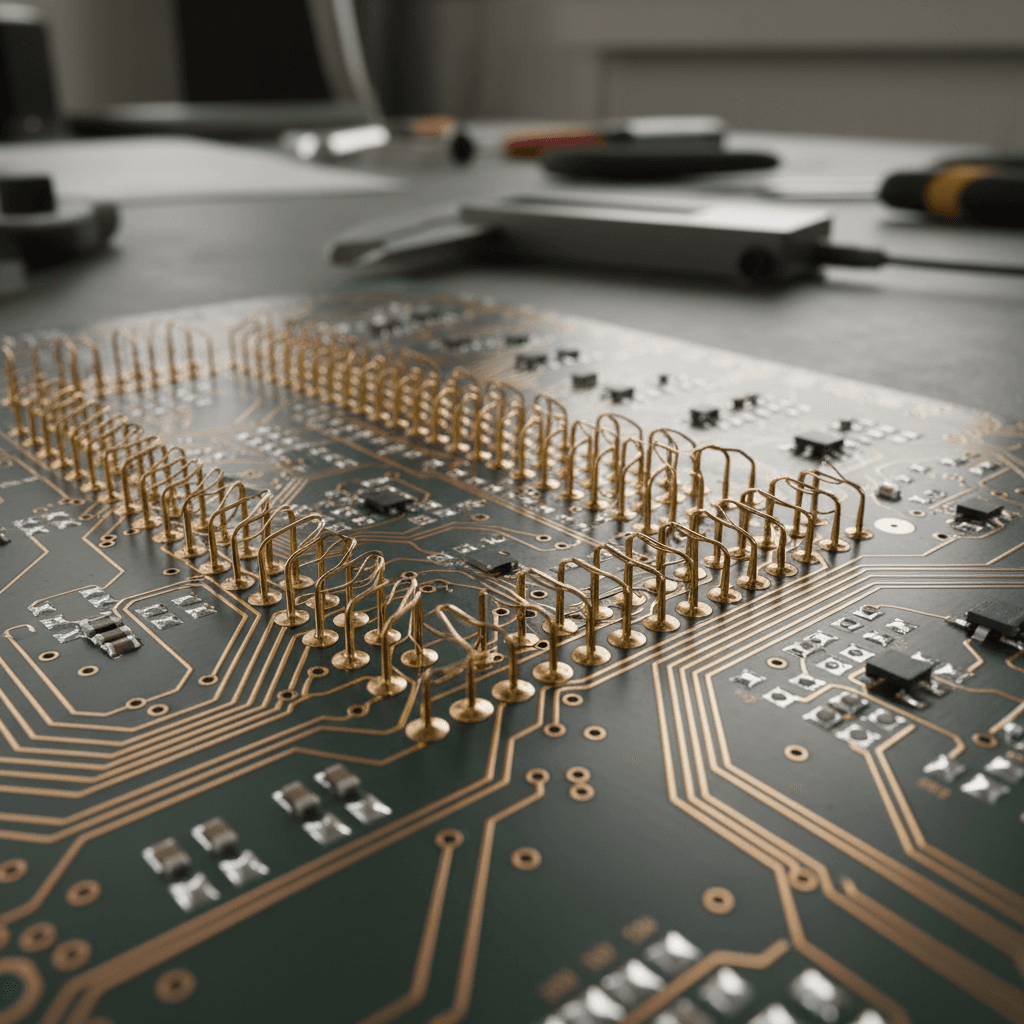
High-density interconnect (HDI) technology has moved from a premium option to a standard expectation in smartphones, wearables, and compact medical devices. HDI boards use microvias, blind vias, and buried vias to pack more circuitry into a smaller footprint without sacrificing signal integrity.
The shift is driven by the relentless push for smaller form factors. Manufacturers investing in laser drilling equipment and sequential lamination processes are better positioned to support this demand. Designers specifying HDI should confirm their fabricator has proven experience with via-in-pad and stacked microvia structures, as these require tighter process control than standard through-hole designs.
2. High-Speed Material Selection Is Getting More Critical
As data rates climb into multi-gigabit territory for 5G, automotive radar, and high-performance computing applications, standard FR4 laminate starts to show its limitations. Signal loss and dielectric variation at high frequencies become genuine engineering problems rather than theoretical concerns.
Low-loss laminates from manufacturers like Rogers, Isola, and Panasonic are increasingly specified for high-frequency designs. Fabricators working in this space need to handle these materials with different drilling parameters, controlled impedance processes, and careful stack-up management. The trend is pushing PCB manufacturers to expand their material libraries and train their process teams accordingly.
According to IPC, controlled impedance requirements are now among the most commonly specified parameters in advanced PCB fabrication, reflecting just how central signal integrity has become to modern board design.
3. Flex and Rigid-Flex Adoption Is Accelerating
Flexible PCBs and rigid-flex assemblies are moving beyond aerospace and medical niches into mainstream consumer and industrial products. The ability to fold a circuit into a three-dimensional shape, eliminate connectors, and reduce weight is increasingly valuable as product designers push for more integration.
Rigid-flex manufacturing is genuinely complex. Layer alignment across flexible and rigid zones, adhesive management, and coverlay processing require specialized equipment and experienced operators. Not every PCB manufacturer handles it well, which makes supplier qualification more important when rigid-flex is on the table.
4. Embedded Components Are Gaining Traction
Embedding passive and active components directly into PCB substrates reduces board surface area, shortens signal paths, and improves thermal performance. Embedded resistors and capacitors have been available for some time, but the technology is now extending to embedded ICs in advanced packaging applications.
The manufacturing complexity is significant. Layer registration, component placement accuracy within the laminate, and reliable electrical connection to embedded parts all require tight process control. Volume adoption remains concentrated in high-end applications, but the trend line points toward broader use as processes mature.
5. Automation and AI Are Entering the Fabrication Floor
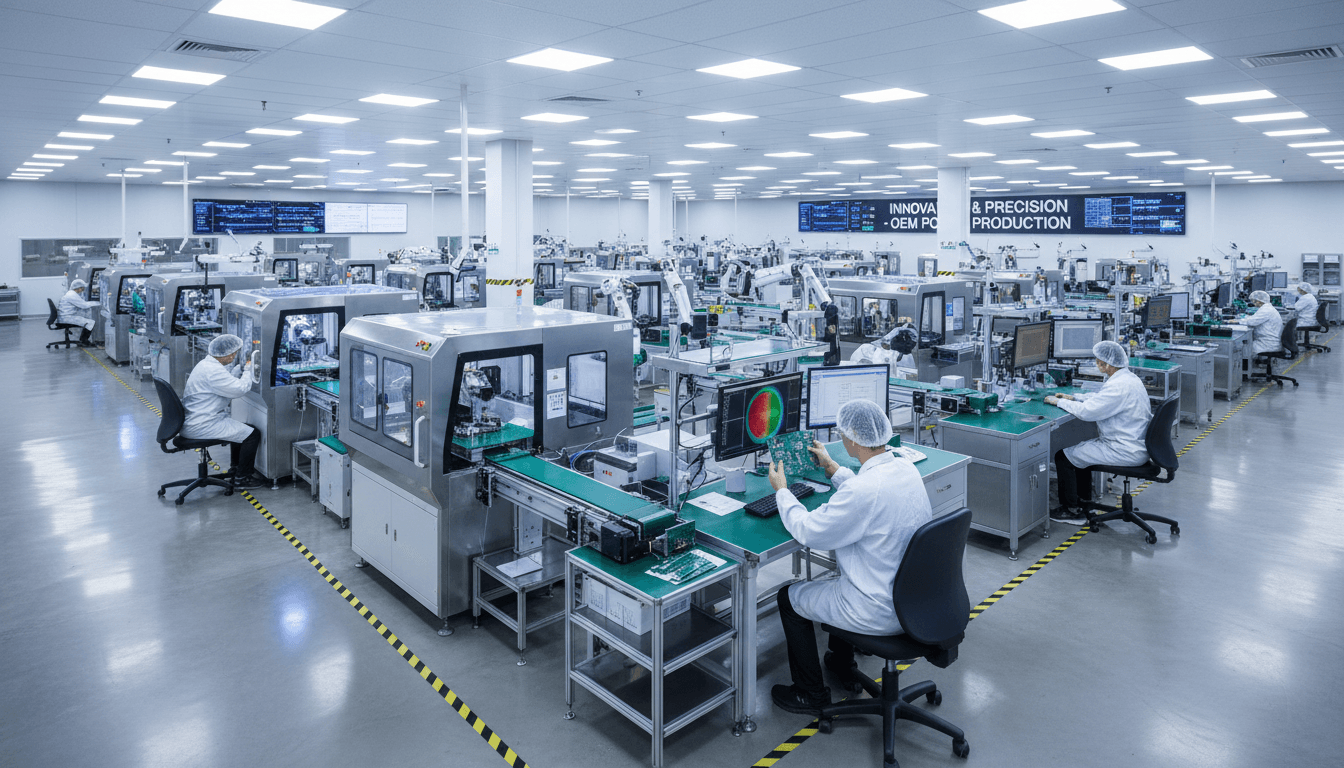
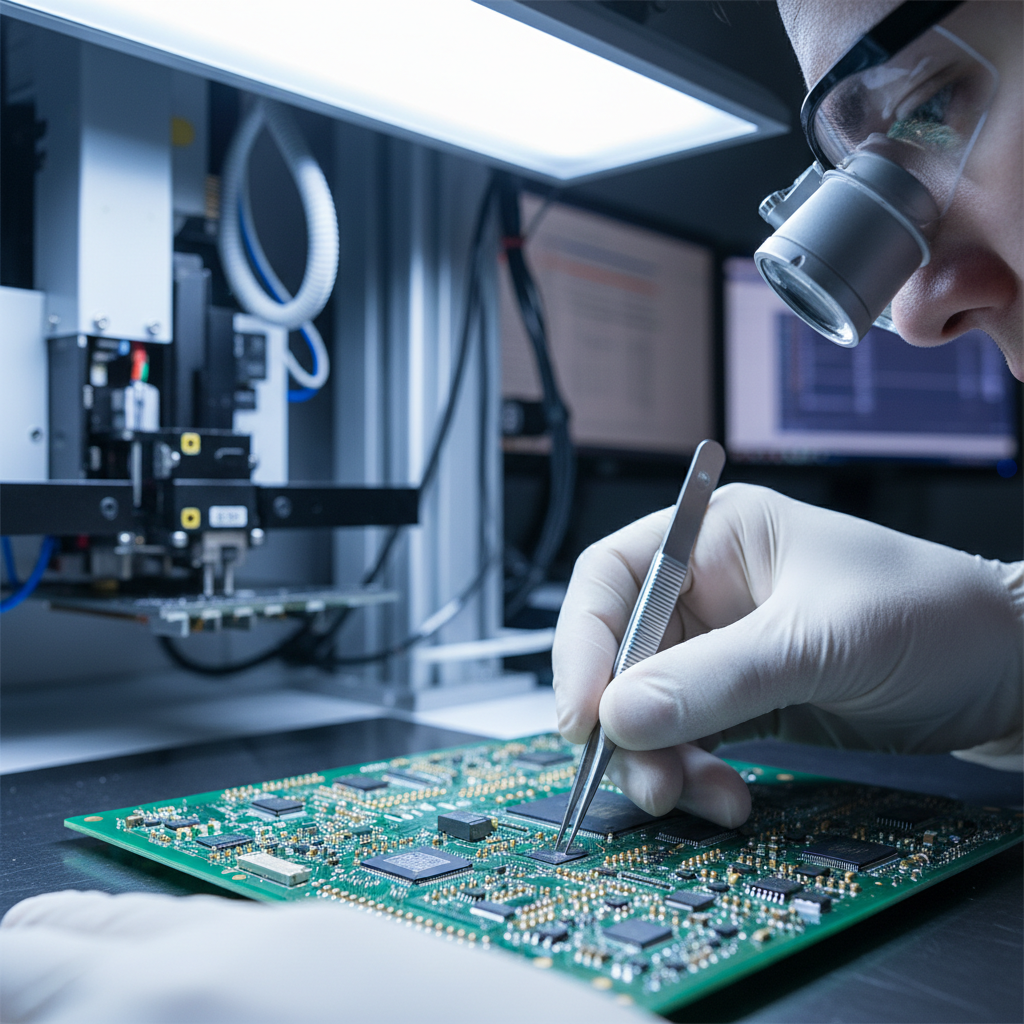
PCB manufacturing has always involved automation, but the current wave goes further. Machine learning is being applied to automated optical inspection (AOI) systems, allowing defect detection that improves with each production run rather than relying solely on fixed rule sets.
Robotic handling systems are reducing human contact with boards during sensitive processing steps, improving consistency and reducing contamination risk. Some manufacturers are implementing AI-driven process control that adjusts etching, plating, and drilling parameters in real time based on sensor feedback. These investments are separating high-output, quality-focused fabricators from shops still running largely manual processes.
6. Sustainability Requirements Are Reshaping Material Choices
Environmental regulation and customer sustainability mandates are pushing PCB manufacturers to revisit everything from laminate chemistry to process chemicals. The industry-wide shift away from halogenated flame retardants has been underway for years, driven by RoHS and REACH directives from the European Union.
Beyond chemistry, water recycling systems, reduced chemical waste, and energy-efficient equipment are becoming competitive factors. Buyers with ESG commitments are increasingly asking suppliers for environmental certifications and data on their manufacturing footprint. ISO 14001 environmental management certification is becoming a meaningful differentiator in supplier selection.
The European Chemicals Agency (ECHA) continues to update REACH substance restrictions that affect PCB manufacturing materials, making compliance monitoring an ongoing requirement for manufacturers serving European markets.
7. Advanced Packaging and PCB Manufacturing Are Converging
The line between PCB fabrication and semiconductor packaging is blurring. Technologies like embedded die packaging, fan-out wafer-level packaging, and chip-last assembly are bringing PCB manufacturers into processes that were previously the exclusive domain of semiconductor fabs.
This convergence requires significant capital investment and process expertise. It also creates new opportunities for manufacturers capable of bridging the gap, particularly for customers developing advanced modules that integrate multiple semiconductor functions in a single compact assembly.
8. Thick Copper and Heavy Copper Boards Are in Higher Demand
Power electronics for EVs, industrial motor drives, and renewable energy systems require PCBs that handle significant current. Heavy copper boards, typically defined as designs using copper weights above 3 oz/ft², allow high current carrying capacity and improved thermal dissipation within the board itself.
Fabricating heavy copper boards requires modified etching chemistry and plating processes to maintain trace geometry at higher copper weights. Lead times are often longer than standard boards, and not all fabricators have the equipment to handle the thicker copper foils involved. Demand is growing in step with the electrification trend across transportation and energy sectors.
9. Faster Turnaround Expectations Are Pushing Fabrication Models
Product development cycles are compressing. Engineering teams want prototype PCBs in days rather than weeks, and the market for quick-turn fabrication has expanded considerably. Online quoting platforms, automated design rule checking, and streamlined production scheduling have made rapid prototyping more accessible.
The challenge for manufacturers is balancing quick-turn capability with quality. Expedited production should not mean skipped inspection steps or reduced process rigor. Fabricators that have invested in dedicated quick-turn production lines separate from standard production flows handle this better than those squeezing prototype orders into regular scheduling.
10. Traceability and Documentation Standards Are Tightening
Automotive, medical, and defense customers have always demanded thorough documentation. That expectation is now spreading to industrial and commercial applications as supply chain scrutiny increases. Manufacturers are being asked to provide material certifications, process records, and inspection data in formats that integrate with customer quality systems.
IPC standards, particularly IPC-A-600 for acceptability of printed boards and IPC-6012 for qualification and performance, are widely referenced benchmarks. Fabricators that maintain thorough production records and can produce first article inspection reports and certificates of conformance on request are better positioned for programs where traceability matters.
What These Trends Mean for Buyers
The gap between advanced PCB manufacturers and commodity shops is widening. Investing in HDI capability, high-frequency materials, embedded components, and AI-driven inspection requires capital and technical depth that not every supplier has.
For buyers, this means supplier qualification is becoming a more involved process. The right questions to ask a potential fabricator include:
What laminate materials do you stock and process regularly?
What is your finest achievable trace and space specification?
Do you have dedicated quick-turn production capacity?
What quality certifications do you hold?
Can you provide controlled impedance test coupons with production panels?
Matching your product requirements to a manufacturer's genuine capabilities avoids costly problems during the production ramp.
FAQs
What is driving the shift to HDI PCBs?
Smaller product form factors and higher component density requirements are making HDI the practical choice for most modern consumer electronics designs.
Is FR4 still suitable for high-frequency PCBs?
FR4 works up to moderate frequencies, but above a few gigahertz, low-loss laminates become necessary to control signal loss and impedance variation.
What certifications should a PCB manufacturer hold?
ISO 9001 and IATF 16949 for automotive, ISO 13485 for medical, and AS9100 for aerospace are the most commonly required depending on the application.
How fast can quick-turn PCB prototypes be produced?
Many fabricators offer 24 to 72 hour turnaround on simple prototype boards, with more complex designs taking five to ten business days.
What is heavy copper PCB used for?
Power electronics, EV charging systems, industrial motor controls, and renewable energy inverters commonly specify heavy copper boards for current handling and thermal performance.