Getting a PCB designed is one challenge. Getting it manufactured consistently, at scale, and to spec is an entirely different problem. For product companies and electronics brands, the manufacturer behind the board is as important as the design itself.
OEM relationships in PCB production go beyond placing orders. They involve process ownership, quality accountability, and supply chain coordination that directly affects what ends up in the final product. Working with a capable OEM PCB assembly partner means your production runs are repeatable, your quality documentation holds up to audit, and your engineering team is not constantly firefighting yield problems.
Here are ten manufacturers worth evaluating, along with guidance on what separates strong OEM partners from generic board houses.
What OEM PCB Manufacturing Actually Involves
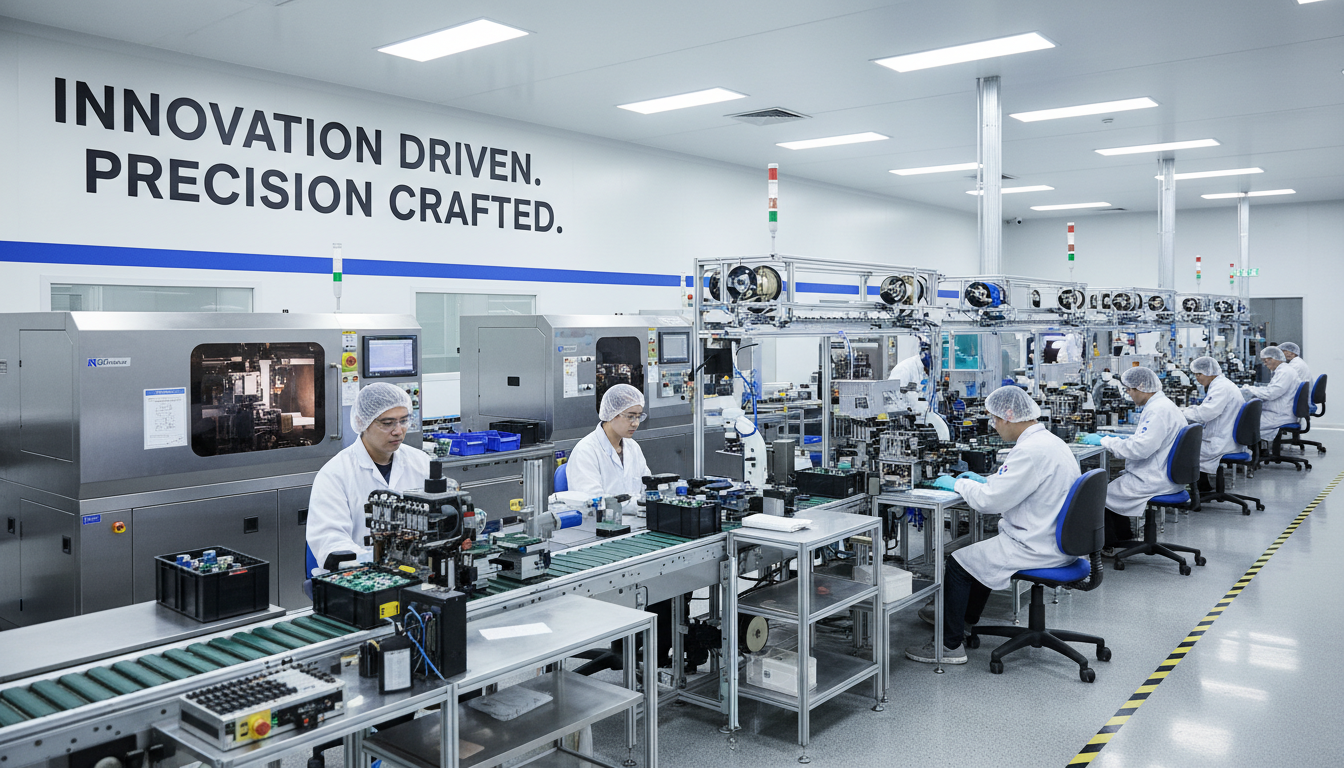
The term OEM gets used loosely. In PCB manufacturing, a genuine OEM relationship means the manufacturer produces boards under the buyer's brand and specifications, taking on process responsibility rather than simply executing a purchase order.
That distinction matters because it changes what the supplier is accountable for. A true OEM PCB manufacturer should be able to:
Manage material sourcing and component procurement on the buyer's behalf
Maintain consistent process parameters across production runs
Provide full traceability documentation from raw material to finished board
Handle engineering changes without disrupting production continuity
Flag design or component issues before they reach the assembly line
This level of involvement requires more than equipment. It requires experienced engineering staff, mature quality systems, and the operational infrastructure to manage complex production programs.
Top 10 OEM PCB Manufacturers Worth Evaluating
1. OurPCB
Business: OurPCB
Spokesperson: Hommer Zhao
Position: Owner
Phone: +1 626 790 1487
Email: hommer.z@ourpcb.com
Location: 160 W Sierra Madre Blvd, Sierra Madre, CA 91024, USA
Website: www.ourpcb.com
OurPCB provides end-to-end OEM PCB manufacturing and assembly services covering fabrication, component sourcing, SMT assembly, through-hole processes, and functional testing. Their service model is built around supporting product companies that need a manufacturing partner rather than a transactional board house. They handle both prototype quantities and production volumes, with engineering support available during the design-for-manufacturing review stage.
2. TTM Technologies
TTM is one of the largest PCB manufacturers in North America with significant operations in Asia. Their OEM capabilities span standard rigid boards through advanced HDI, RF, and high-frequency substrates. They serve aerospace, defense, medical, and commercial markets with full traceability and compliance documentation.
3. Sanmina Corporation
Sanmina operates as an integrated manufacturing services company with PCB fabrication among its core capabilities. Their OEM model covers design support through full box build assembly, which suits product companies that want a single manufacturing partner across the entire product rather than managing separate board and assembly suppliers.
4. Benchmark Electronics
Benchmark provides electronics manufacturing services with strong OEM program management capabilities. They work with customers in industrial, medical, and defense sectors and offer engineering services alongside production, which is useful when a product is transitioning from prototype to volume manufacturing.
5. Jabil Inc.
Jabil is one of the world's largest electronics manufacturing services companies. Their PCB assembly and OEM production capabilities are supported by global manufacturing footprint and supply chain infrastructure. For high-volume programs with regional distribution requirements, Jabil's scale is a genuine advantage.
6. Flex Ltd.
Flex operates across multiple manufacturing verticals including electronics and PCB assembly. Their OEM services include supply chain management, design for manufacturing feedback, and production across multiple geographic regions. They work with customers ranging from startups scaling to production through established OEMs managing complex global supply chains.
7. Celestica
Celestica focuses on complex electronics manufacturing for demanding markets including aerospace, healthcare, and industrial automation. Their OEM PCB capabilities include advanced assembly processes, strict quality management systems, and engineering collaboration during product development. They are better suited for technically complex programs than for commodity board production.
8. ICAPE Group
ICAPE operates as a technology distributor and PCB manufacturer with a network of qualified factories primarily in Asia. Their model works well for companies that need access to a range of PCB technologies without managing multiple factory relationships directly. They handle quality oversight across their manufacturing network on the customer's behalf.
9. Elmatica
Elmatica is a Norwegian PCB broker and manufacturer with a focus on advanced and complex board technologies. They manage production through a network of certified factories and specialize in rigid-flex, HDI, and high-frequency boards. Their value is strong technical knowledge combined with supply chain management across specialist manufacturers.
10. Advanced Circuits
Advanced Circuits is a US-based PCB manufacturer serving prototypes through production volumes. Their OEM offering is particularly relevant for North American product companies that prioritize domestic manufacturing for compliance or supply chain reasons. They hold IPC certifications and offer quick-turn capabilities alongside standard production scheduling.
Key Criteria for Evaluating OEM PCB Partners
Quality Management Certification
ISO 9001 is the baseline. For specific markets, additional certifications apply. IATF 16949 is required for automotive supply chains. ISO 13485 covers medical device manufacturing. AS9100 is the standard for aerospace and defense. A manufacturer holding only generic quality certifications may not be qualified for regulated market applications regardless of their production capability.
According to IPC, the IPC-A-610 acceptability standard for electronic assemblies is one of the most widely referenced quality benchmarks in PCB assembly, and conformance to it is a reasonable baseline expectation from any OEM manufacturer.
Engineering Support Availability
OEM programs benefit significantly when the manufacturer provides DFM review before production starts. Catching a pad geometry issue, a component footprint mismatch, or a via placement problem at the review stage costs far less than discovering it during first article inspection or, worse, after production boards fail in the field.
Ask prospective suppliers whether engineering review is included in their process or treated as a separate service.
Component Sourcing and BOM Management
Full OEM service typically includes component procurement. Evaluate whether the manufacturer sources from authorized distributors, how they handle component shortages, and whether they maintain approved vendor lists. Counterfeit component risk is real in global supply chains, and reputable manufacturers have processes to mitigate it.
The Electronic Components Industry Association (ECIA) provides resources on authorized component sourcing, which is a useful reference when evaluating a supplier's procurement practices.
Production Traceability
End-to-end traceability from bare board material through finished assembly is increasingly expected in OEM contracts. This means lot tracking, serialization where required, and documentation that can support a field failure investigation or regulatory audit. Confirm what traceability data the manufacturer captures and in what format it is provided.
Scalability from Prototype to Volume
The best OEM relationships start early in a product's life and scale with it. A manufacturer that supports low-volume prototype builds under the same quality system as production runs is more valuable than one that only engages at volume. Early involvement also means process knowledge is already established when volume ramp begins.
OEM PCB Manufacturing Capability Comparison
Capability | What to Confirm |
Layer count | Maximum layers the factory regularly produces |
Minimum trace/space | Finest geometry achievable in production |
Surface finishes | HASL, ENIG, OSP, hard gold availability |
Assembly types | SMT, through-hole, mixed, press-fit |
Testing options | AOI, ICT, functional test, X-ray |
Certifications held | ISO 9001, IATF 16949, ISO 13485, AS9100 |
Common OEM PCB Applications by Industry
Different sectors place different demands on their PCB manufacturing partners:
Medical devices: Strict material traceability, ISO 13485 compliance, and sterile packaging requirements
Automotive: IATF 16949 quality systems, PPAP documentation, and long product lifecycle support
Industrial automation: Robust construction, conformal coating, and extended temperature range capability
Consumer electronics: High-volume efficiency, cost management, and rapid engineering change handling
Aerospace and defense: AS9100 certification, full material traceability, and controlled process environments
FAQs
What is an OEM PCB manufacturer?
A manufacturer that produces boards to a buyer's specifications and brand, taking on process and quality responsibility rather than simply filling orders.
What certifications matter most for OEM PCB production?
ISO 9001 is the baseline. Add IATF 16949 for automotive, ISO 13485 for medical, and AS9100 for aerospace depending on your market.
Should OEM manufacturers provide DFM review?
Yes. Design for manufacturing review before production starts catches problems early and reduces costly rework or field failures later.
How do OEM manufacturers handle component shortages?
Established manufacturers maintain approved vendor lists and relationships with authorized distributors. Ask specifically how they manage allocation situations.
What is the difference between a PCB manufacturer and an EMS provider?
A PCB manufacturer produces the bare board. An EMS provider handles assembly and may offer full box build. Many OEM partners offer both under one roof.
Choosing an OEM Partner That Holds Up Long Term
The manufacturers listed here cover a range of sizes, specializations, and geographic footprints. There is no single right answer. The right OEM PCB partner is the one whose capabilities, certifications, and operational model match your product's requirements and your program's stage.
A small product company in development benefits most from a manufacturer with strong engineering support and flexible prototype quantities. A scaling business moving into volume production needs process stability, supply chain infrastructure, and documented quality systems that can withstand customer audits.
Take the supplier qualification process seriously. Request sample documentation, visit facilities where possible, and start with a trial production run before committing long-term. The board manufacturer you choose will have a direct hand in the quality and consistency of every product that reaches your customers.